April 9, 2018
Good morning, fellow ELD users!

The ELD world has become real-time now and all of us on the box are fully accountable for the entries
we do (or do not) make on our log application.

Some of us have been on the box for almost a year and some of us have been on it a considerably
shorter time, but we all have the same goal: to run and make money.

We all need to remember that the ELD is basically just a motion sensor, it senses when the truck is
being driven.  It is built to detect when your truck is in motion, but you have to tell it what the purpose
for that motion is and if that motion is for a purpose other than standard driving.

The application on your phone or tablet (your log) will keep track of all your hours and all your limits
based on what we tell it as we live, run, and work, but it has to be told, just like you had to fill in your
old paper log.  Remember, it is a machine, whether it is your phone or your tablet. It cannot do what
you don’t tell it to do. The KeepTruckin Application is where you keep your log and life information for
each 24-hour period; all the box tells your log is if the truck was in motion and places that in your log
at the appropriate time.

Just like with paper logs, every time you climb in and sit down in the driver’s seat, you have to take a
minute and make sure the log is set for your next new duty status (draw your electronic line).

The ELD and your log application did not and does not change the time you have to run and make
money; it actually helps you run and earn because it keeps track of where you are in your daily, weekly,
and 70-hour cycle so you can plan better for the next move. And requires no math in order to see it!!
You always know if you can run another trip before you need a 34-hour restart!

Several operators here at Bee-Line that swore they would quit or retire before going electronic are
happily running and making the same or more on each settlement . One told me several months ago
“OK, let’s try that dang box”.  Several days into the next week of running on the box the same operator
came to me and said with a big smile on his face “how soon can I quit using the stupid paper logs and
just use the contraption?”

Understanding that the application is your log and the box is just the motion sensor makes more sense of
the process.

You are still creating your log; YOU still have to change your duty statuses; YOU still have to add your
trip number, complete your DVIR, and sign your log; You still have to make sure your log is accurate
and up to date. The trick is to use the ELD as a planning tool, rather than a hindrance. Use it to benefit
your operation so that you can more effectively utilize your Hours of Service to make more money per
on-duty hour. The insight you will uncover the more you use the ELD, will allow you to have greater
knowledge into gaps in your work week that need improvement to improve cash flow.

Below are some of the recent quotes from drivers we have heard while discussing the ELD with Bee-Line
drivers:

“I make as much or more now as before and it is easier to see if I have time to run.”
“I make fewer log mistakes and spend less time than when we did on paper. The app does most of the
work. I do the status and the app does all the lines, all of the math, adds up my recap, and even tells me
when I need to break or take 10.”
“It took a while to learn, but now, if I do it right, logging is a breeze and nearly always right” “It has
really helped me manage the 30-minute break and, after a few problems reading time right, getting my rest
and getting rolling again. I really like how I can plan better knowing all my times so I can ask Dispatch for
more runs."
“I run more miles now because I can tell them (Dispatch) that I have time."
“I am seeing more rest periods under a load on the road, but less time between loads and that makes more
miles and more money and better weeks”

In closing, we know some of us still have some daily issues adapting to an electronic means of logging,
but those issues are usually bad input and correctable.  The playing field has not changed and the rules
are the same. If we run right and manage our log (the ELD application) correctly, then we stay legal and
the machine is just a very useful tool for us.
February 28, 2018
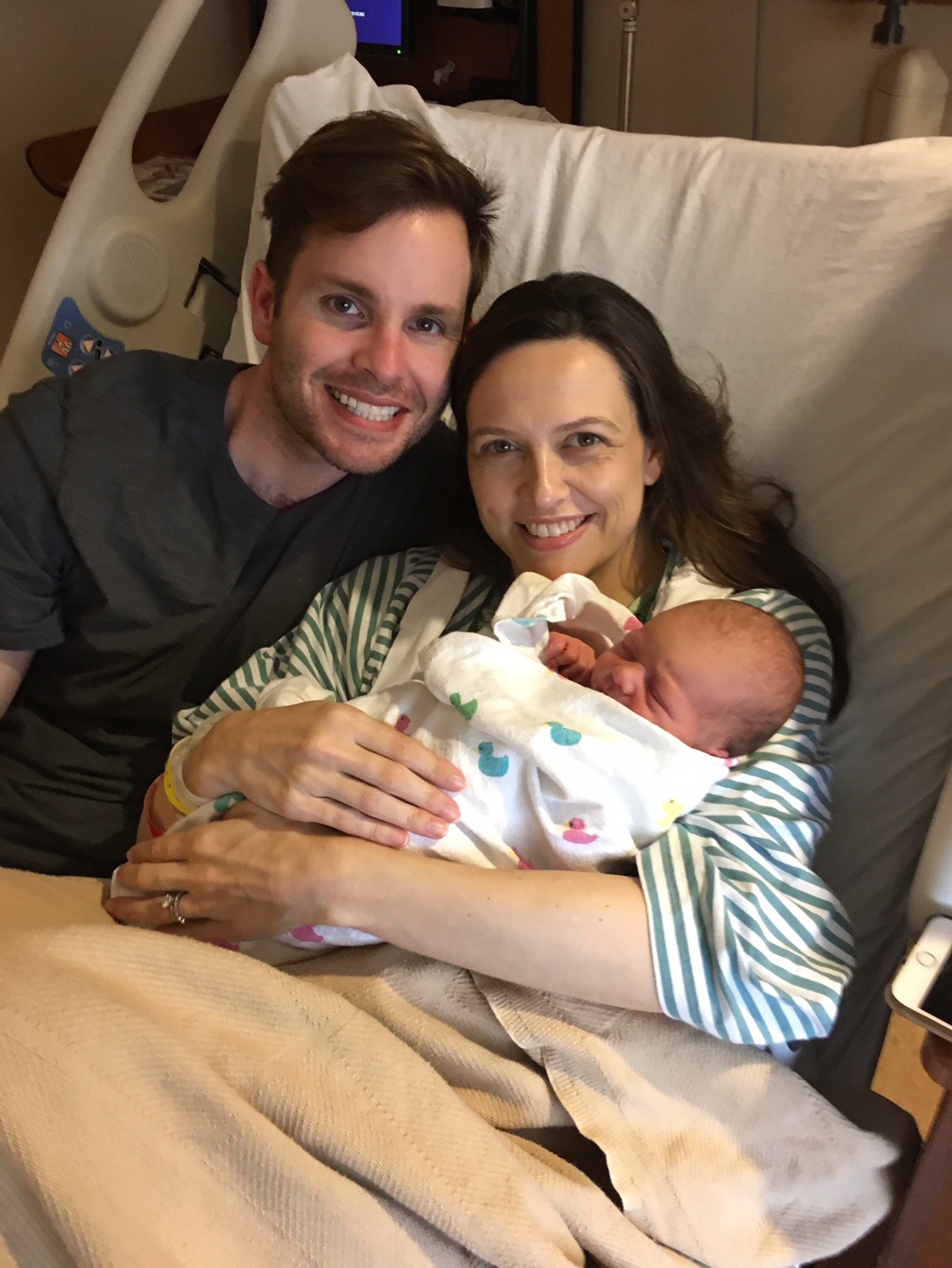
Everyone welcome the newest member of the Bee-Line Family. William Lyons McMillan was born on February 21, 2018 at 11:30 pm. He weighed in at 8.0 pounds and 21.5 inches. His first time parents, Matthew and Taylor McMillan are doing well. We expect for William to go through orientation and begin his career soon.
Congratulation to William and his proud parents.